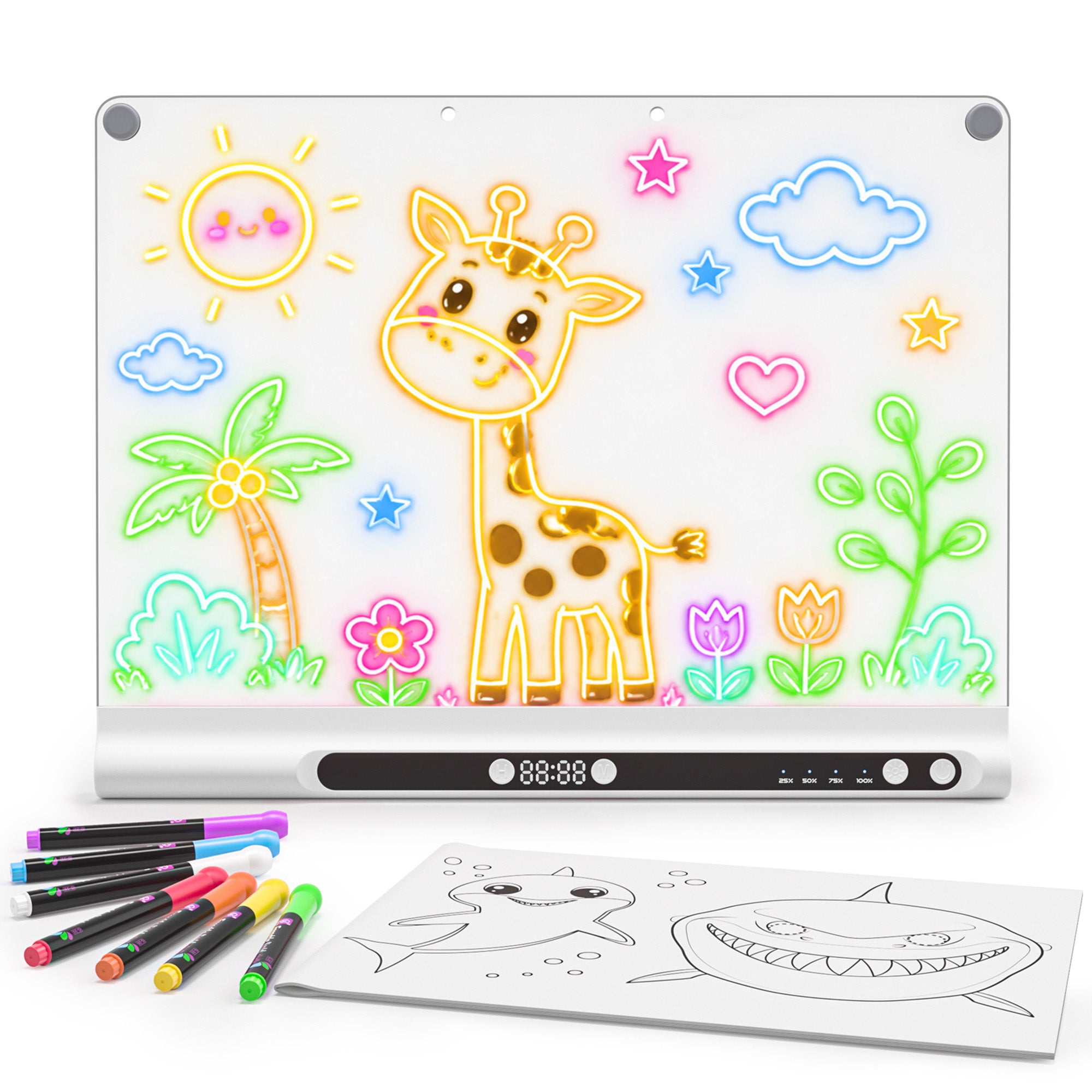
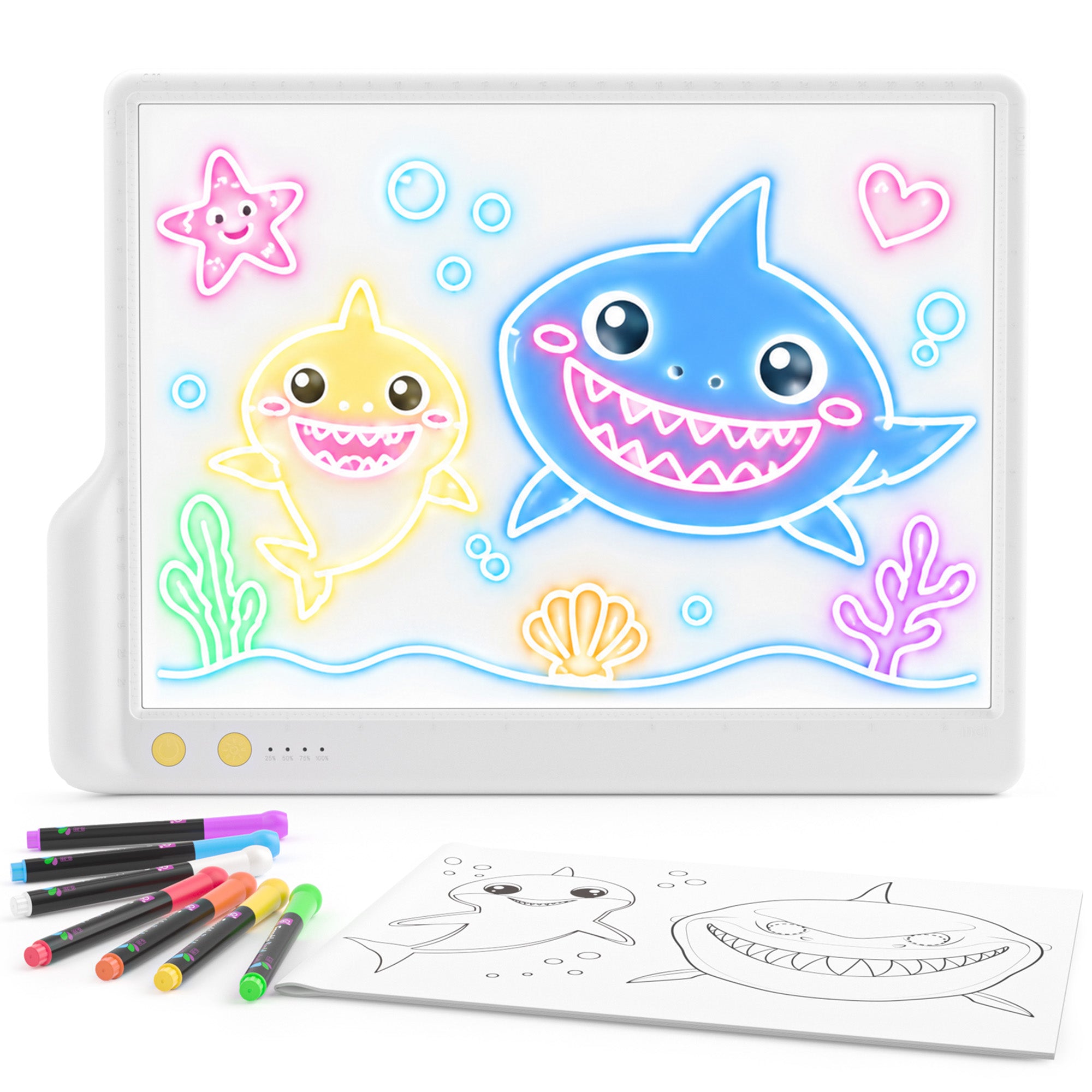
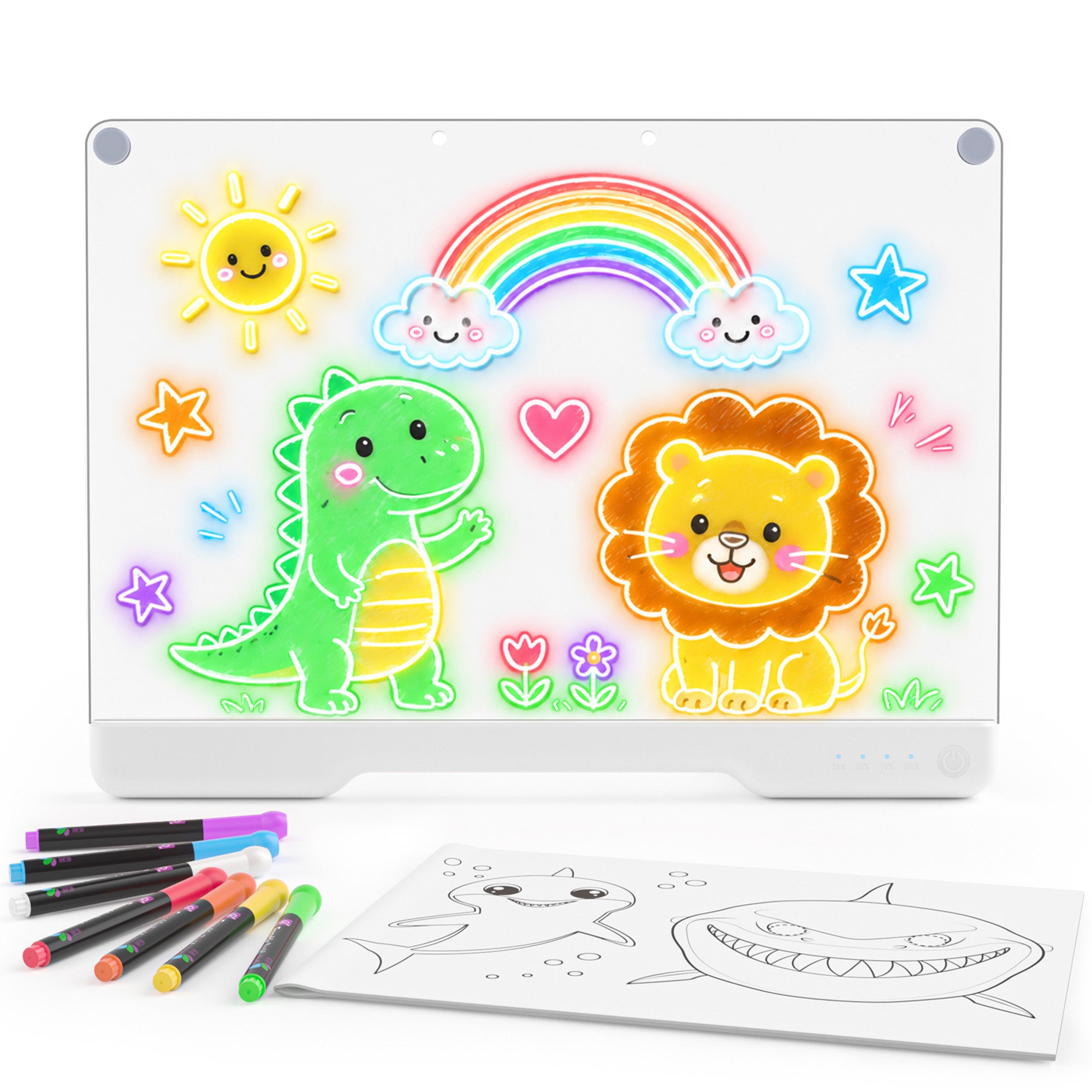
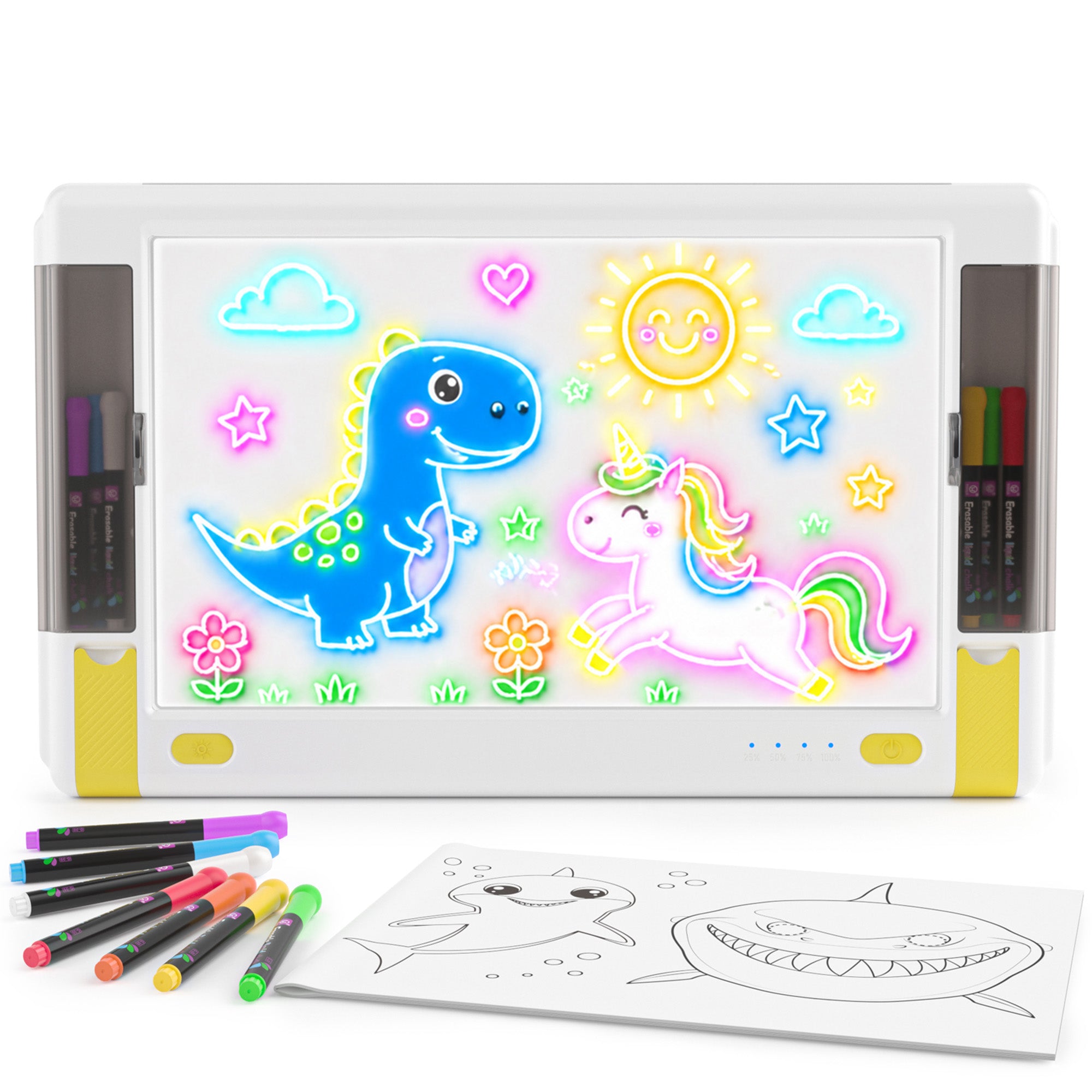
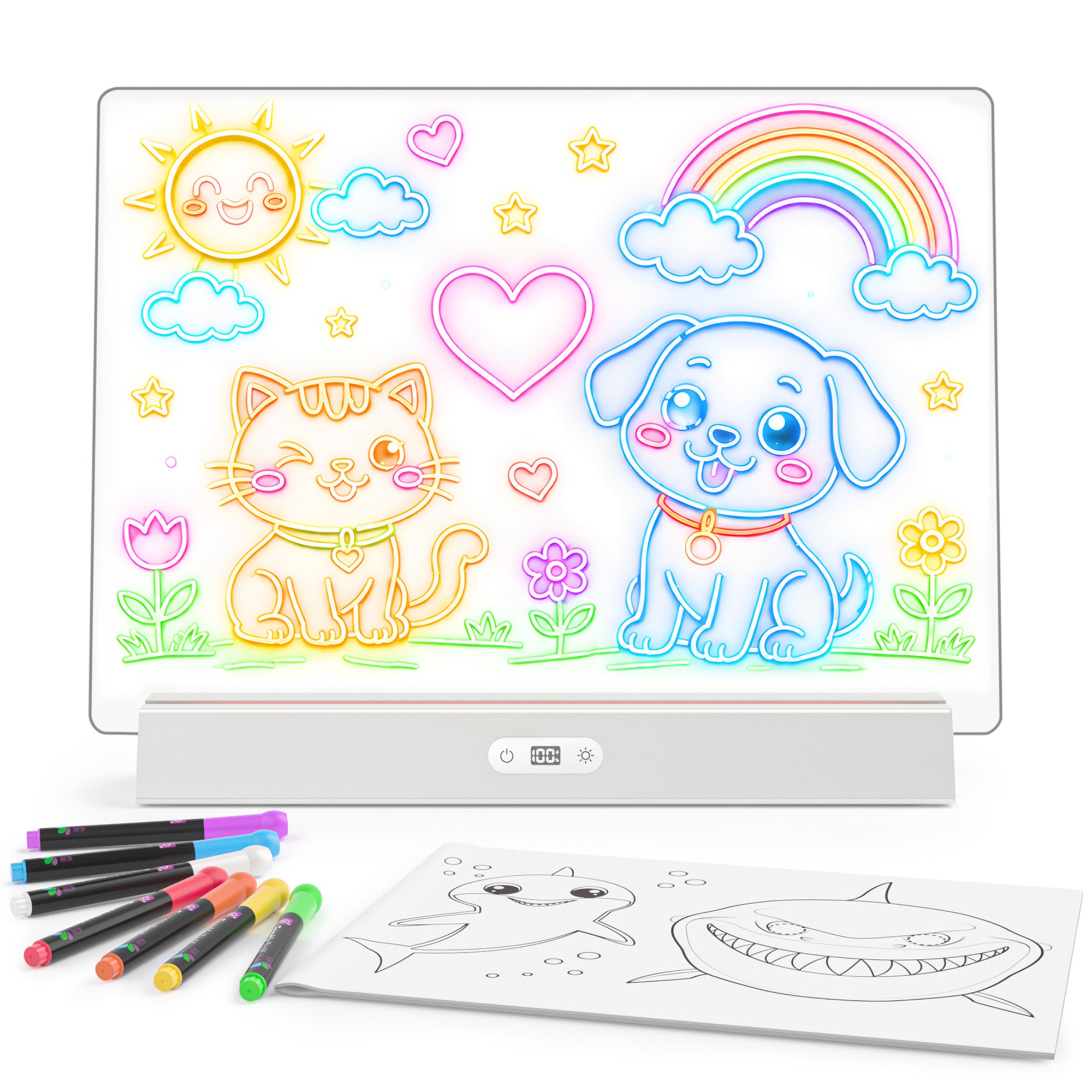
Encourage creativity without messy walls. Discover how an LED drawing board helps children enjoy free drawing, tracing, and learning while keeping homes clean and organized.
Solving a Household Pain Point: Artistic Freedom vs. Wall Cleanliness - No More Trade-Offs
Ages 3 to 6 mark a child's sensitive period for drawing. During this stage, scribbling is not just a form of play – it's an important way to develop hand-eye coordination and imagination. Yet many parents face the same dilemma: the living room wall becomes their child's first canvas.
Forbidding it outright may suppress creativity, while letting it happen leads to ruined walls. Is there a solution that offers the best of both worlds? The answer is: give your child a better surface to draw on than the wall – an LED drawing board.
Why Do Children Perfect Drawing on Walls?
Walls appeal to children for three reasons: they offer a large surface area, a firm texture, and strong visibility. Standard A4 paper cannot accommodate the broad, energetic strokes of toddler scribbling – it wrinkles easily and feels flimsy. Walls, by contrast, are stable and eye-catching. In other words, children aren't being deliberately difficult. Ordinary paper simply isn't up to the job.

At a Glance: LED Drawing Board vs. Common Drawing Surfaces
| Comparison Dimension | Plain Paper | Wall Drawing | LED Drawing Board |
| Cost Per Use | High (constantly buying paper) | Very high (costly wall repair) | Very low (reusable, erasable) |
| Drawing Experience | Paper wrinkles easily, restricts movement | High freedom, but damages walls | Firm surface + backlight, optimal experience |
| Tracing/Learning | Requires light source to see through, inconvenient | Cannot trace | Place paper over and trace directly, easy to start |
| Eye Safety | Normal under natural light | Normal | Soft backlight, reduces visual fatigue |
| Parental Intervention | Frequent paper replacement needed | Frequent scolding/stopping needed | Minimal intervention required |
As the table shows, the LED drawing board offers clear advantages across three dimensions: cost, user experience, and convenience. It is not a replacement for paper and pen, but rather a dedicated platform for “mass practice”and “free exploration” - exactly what young children need during their creative development.

LED Drawing Board: Designed for Children's Drawing-Sensitive Period
LED drawing boards were originally used by professional animators and artists as tracing tools. In recent years, thanks to their safety, reusability, and low learning curve, they have been increasingly adopted by families for early childhood drawing education.
For children: The backlight makes the drawing surface clearer, and the tracing feature allows even children who "don't know how to draw" to complete recognizable images, giving them a strong sense of accomplishment. Additionally, the smooth surface is easy to wipe clean. Mistakes can be corrected instantly, encouraging children to experiment without fear.
For parents: Reusability means zero consumables, saving the ongoing expense and hassle of buying paper. The soft backlight is far gentler on the eyes than smartphones or tablets. And most importantly – your walls stay safe.

Applicable Scenarios
An LED drawing board is not just for one type of family. Here are the scenarios where it shines brightest:
Drawing-sensitive period (Ages 3-6): Satisfies the urge to scribble while keeping your walls clean. Gives children their own creative space.
Preschool transition stage (Ages 5-7): Perfect for tracing, stroke practice, and early writing prep. Zero paper waste.
Multi-child families: One board, shared easily. No extra supplies or space needed.
Small homes: No dedicated art corner required. Fits on any desk or table.
Buying Guide for Parents
When choosing an LED drawing board for your child, here are the key features to look for:
· Light uniformity: A quality board has even brightness across the entire surface, without bright spots in the center or dim edges.
· Brightness and color temperature: Look for a product with adjustable brightness. For color temperature, warmer light (around 4000K) is gentler on children's eyes for extended use than cool white light.
· Edge safety: Products for children should feature rounded corners and smooth, burr-free edges.
· Power supply: USB power is the most flexible option – works with power banks or AC adapters.
· Waterproof and easy to clean: The surface should support wet wipe cleaning. Standard dry-erase markers wipe off completely after use.
Summary
Guiding a child's interest in drawing is not about "controlling their hands" – it's about providing the right tools and environment.
The LED drawing board, with its three core features – soft backlight, tracing assistance, and reusability – effectively resolves the conflict between "children want to draw" and "parents fear the mess." It protects both your walls and your child's creative spirit.
Instead of following your child around every day cleaning up "disasters," give them their own drawing board. When they have a surface more appealing than the wall, your walls will naturally stay safe.
📌 For specific product models, size options, or more usage tips, please browse our [LED Drawing Board Series] or contact customer service.