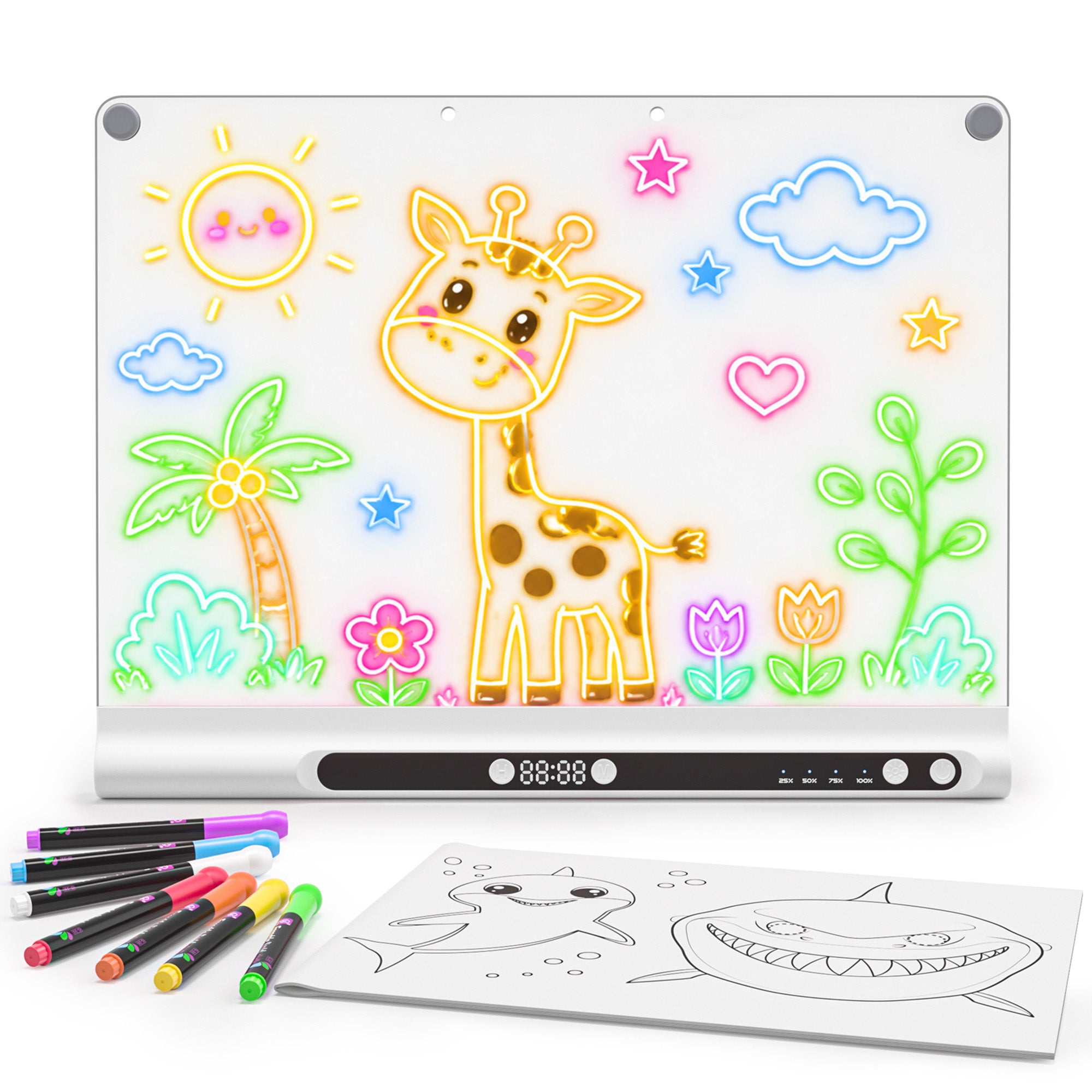
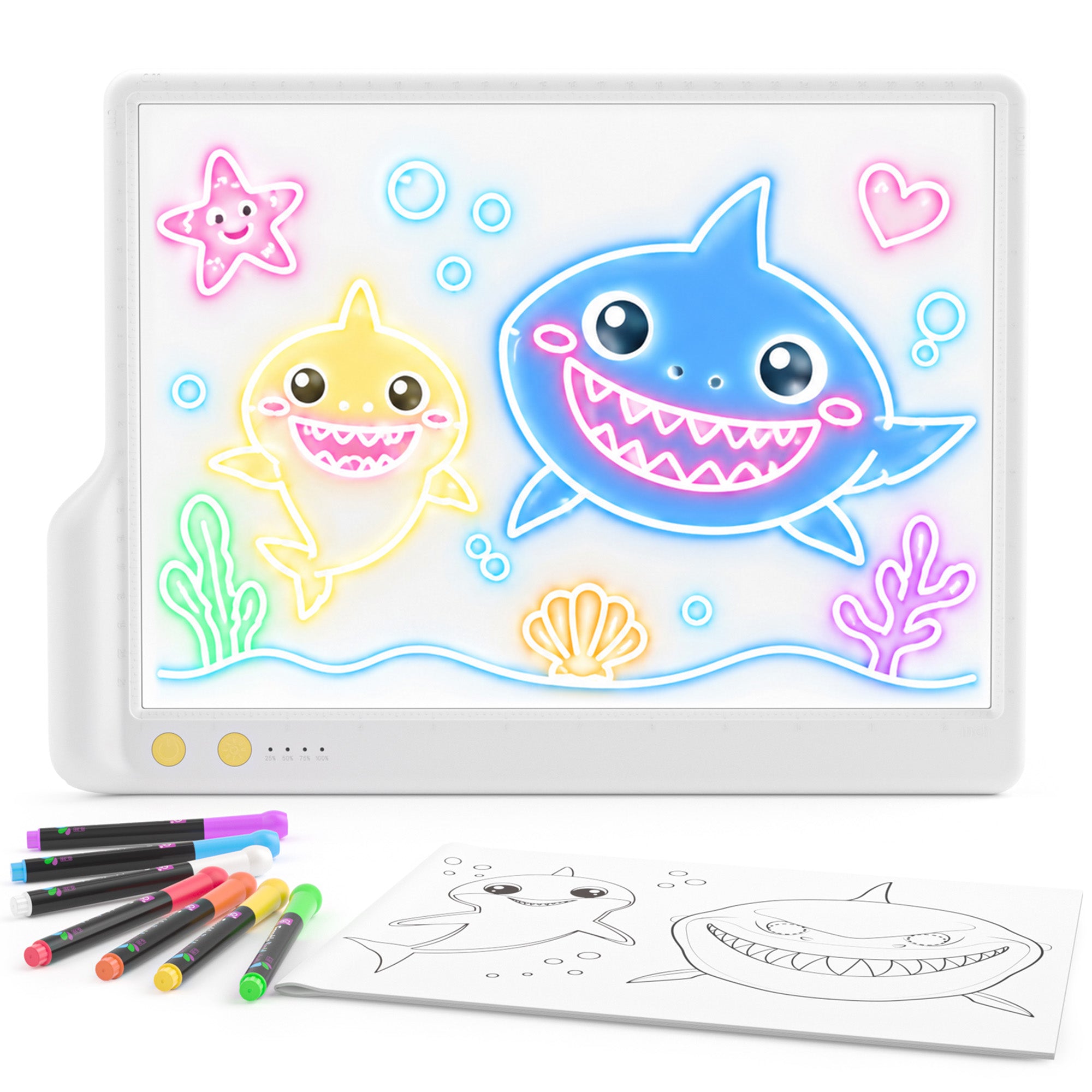
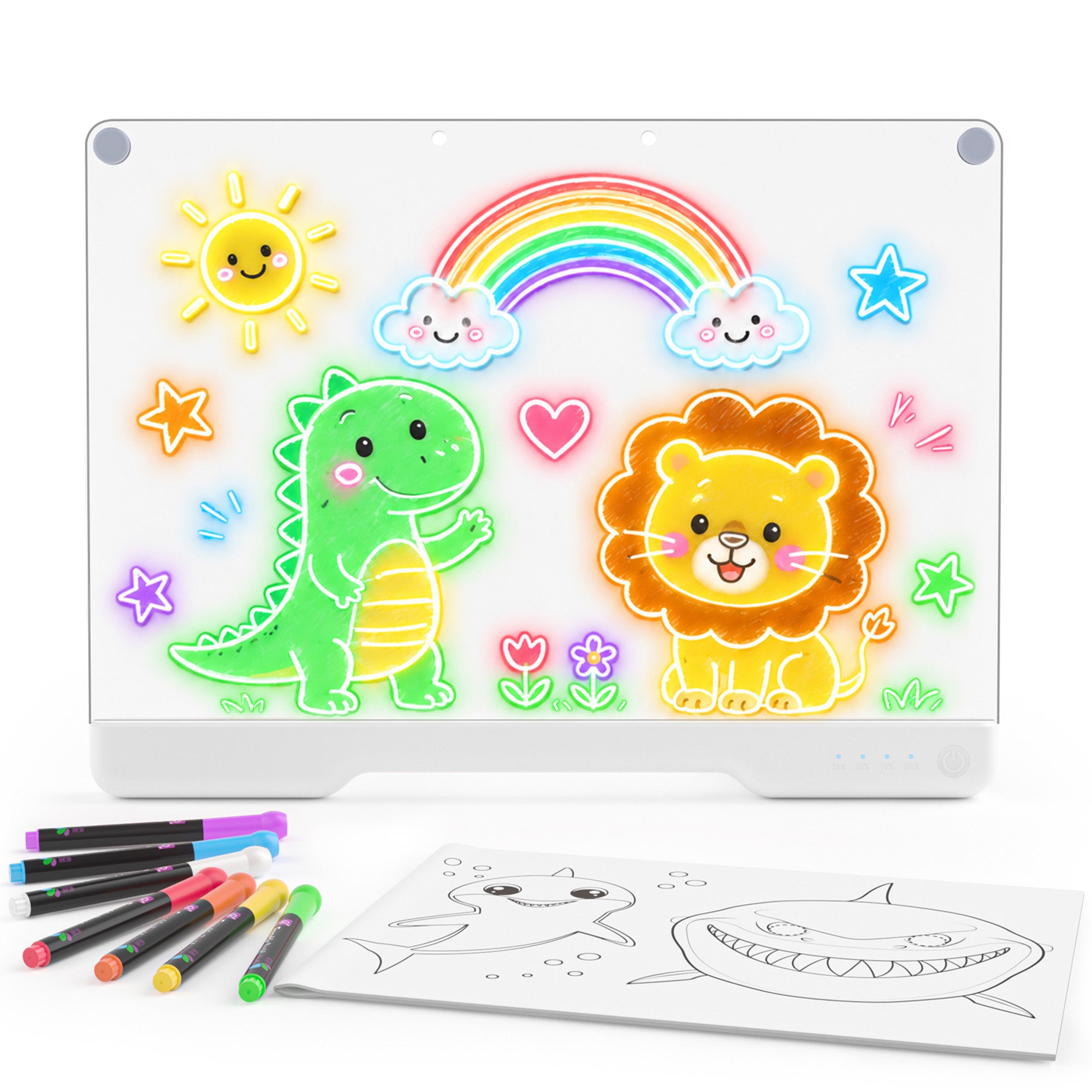
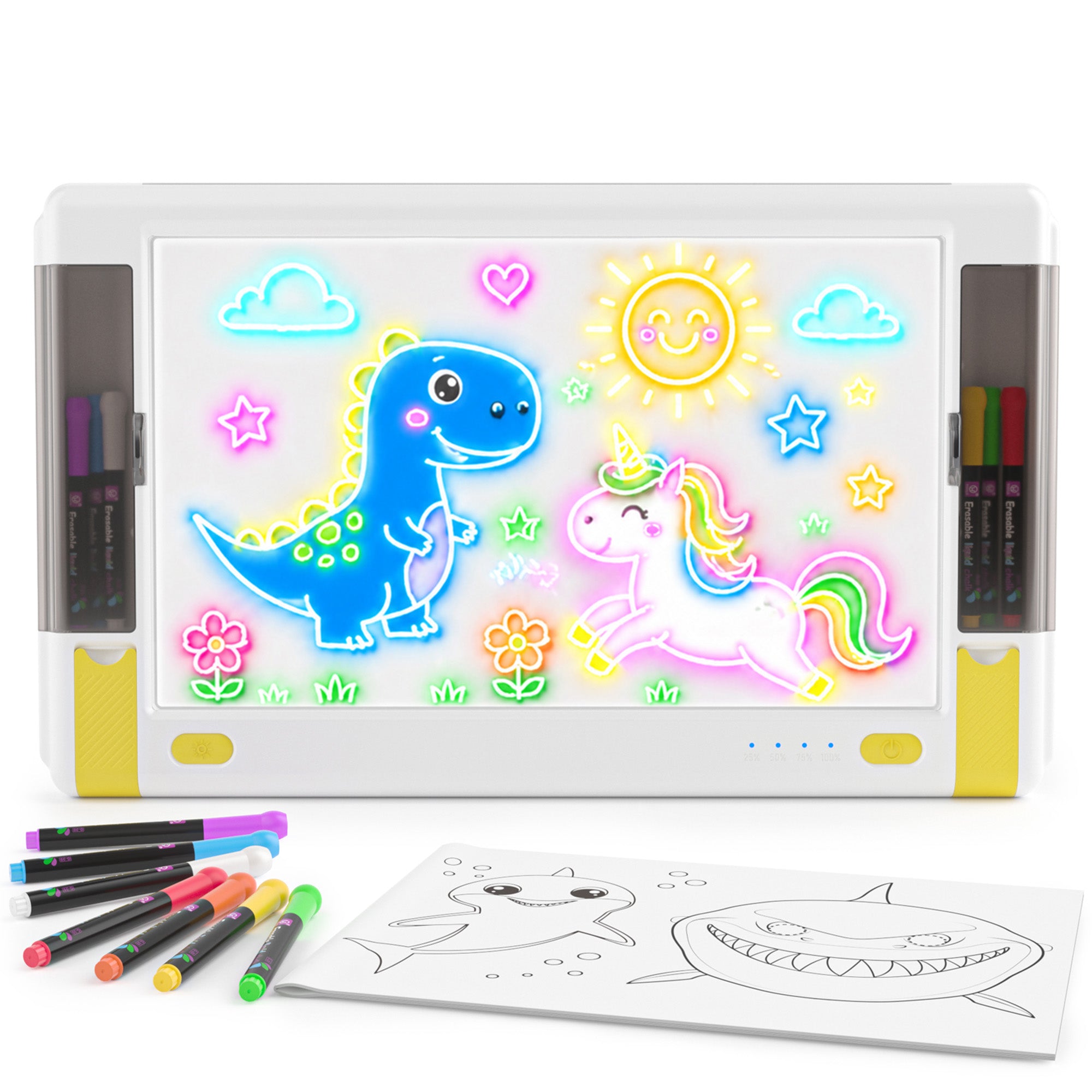
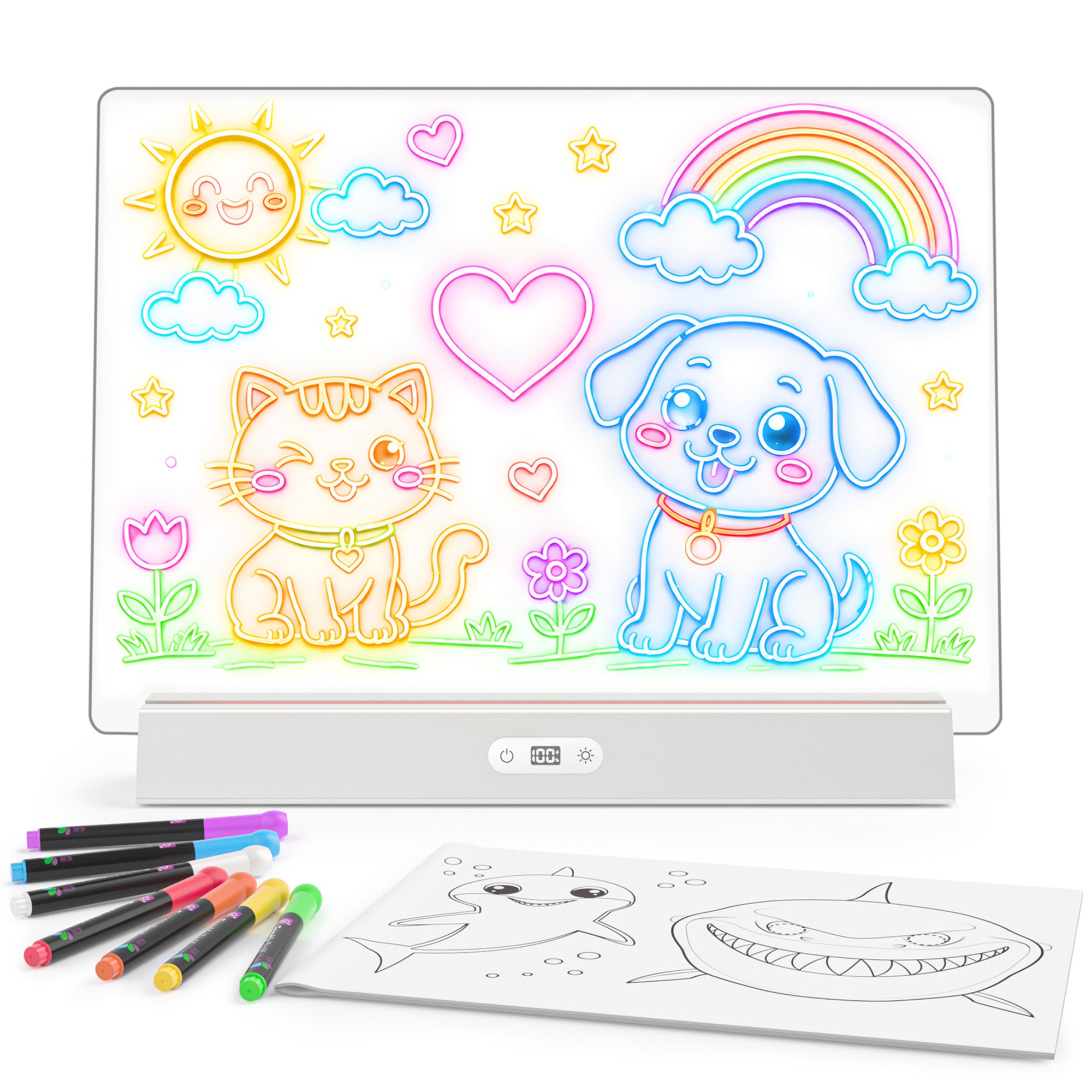
Explore the fast-growing LED drawing board market. Learn key trends, consumer insights, pricing strategies, and competitive landscape to identify opportunities in this rising category.
The LED drawing board has shown significant growth in the global market in recent years. However, independent statistical data on its market size remains unavailable, as the product is typically categorized under broader segments such as "electronic drawing pads," "children's toys," or "LED display products," making it difficult to obtain accurate market share figures.
Market Size and Positioning
1.1 Market Positioning and Size Reference
In industry classification, the LED drawing board is typically grouped under broader categories such as "electronic drawing pads," "educational toys for children," or "LED display products." No single classification can accurately reflect its market characteristics, as the product combines drawing functionality, luminous properties, and a consumer-grade positioning — placing it at the intersection of three markets.
To reasonably estimate its market size, the following three related markets are used as reference frameworks:
| Related Market | Latest Valuation | Data Source |
| Digital Drawing Pad Market | Approx. USD 2.5 billion (2025) | Business Research Insights |
| Educational Toy Market for Children | Approx. USD 30 billion (2025) | Industry Composite Data |
| LED Signage Market | Approx. USD 25 billion (2025) | GII Research |
Based on the above reference frameworks and cross-validation with e-commerce platform sales data, the global annual sales of LED drawing boards are estimated to be in the range of USD 500–800 million, with a compound annual growth rate (CAGR) of approximately 15–20%. This product category is on a rapid growth trajectory and presents considerable commercial value.

1.2 Structural Characteristics of the Category
The core feature that distinguishes the LED drawing board from professional digital drawing tablets lies in its market structure of "high sales volume with low unit price":
|
Dimension |
Estimated Share |
Business Implication |
|
Sales Volume Share in Electronic Drawing Category |
30%–40% |
Large user base with broad channel coverage |
|
Revenue Share in Electronic Drawing Category |
5%–10% |
Limited profit margins; dependent on economies of scale |
|
Mainstream Price Range |
USD 10–50 |
Falls within the impulse purchase price zone |
|
Mainstream Price Range for Professional Digital Tablets |
USD 200–500 |
Falls within the rational decision-making price zone |
This structural characteristic determines that the business model for this product category must be built around three core elements: high inventory turnover, tight cost control, and extensive channel coverage.
Key Market Insights & Data
2.1 Seasonal Characteristics: Q4 as the Core Sales Window
According to Google Trends search data, the search volume for "LED drawing board" and related keywords exhibits significant seasonal fluctuations:
· Search volume begins to rise in August each year
· Peaks in November and December
· Declines sharply after January to lower levels
2.2 Consumer Focus: Durability and Reliability
Based on analysis of user reviews on the Amazon platform, the high-frequency negative review keywords for this product category and their respective share distribution are as follows:
|
Negative Review Reason |
Mention Rate |
Corresponding Improvement Direction |
|
Product not durable |
21.9% |
Strengthen structural design and quality control |
|
Damaged during shipping |
20.9% |
Optimize packaging solutions |
|
Insufficient/uneven brightness |
17.7% |
Improve LED quality and arrangement design |
High-frequency positive review keywords are concentrated on "ease of use" (52.4%) and "dust-free design" (18.3%).
Business Insight: The core opportunity for product differentiation lies not in feature stacking, but in addressing fundamental reliability issues. It is recommended that product development prioritize three metrics: structural robustness, packaging protection, and light source quality.
2.3 Core Application Scenarios and Customer Distribution
Based on search term analysis and e-commerce platform data, the primary application scenarios and target customer groups for this product category can be summarized as follows:
|
Application Scenario |
Target Customer Group |
Core Demand |
Recommended Price Range |
|
Early Childhood Education |
Parents of children aged 3–8 |
Safety, durability, eye protection |
USD 15–25 |
|
Gift Market |
Holiday gift-givers |
Packaging quality, brand recognition |
USD 20–35 |
|
Content Creation |
Gen Z users |
Aesthetic ambiance, photo-ready design, style appeal |
USD 25–40 |
|
Professional Tracing |
Art students / hobbyists |
Large size, high brightness, pressure sensitivity |
USD 40–60 |
2.4 Regional Market Difference
Significant differences in demand characteristics exist across regional markets. Merchants are advised to adopt differentiated product and pricing strategies accordingly:
|
Region |
Core Demand |
Sweet Price Range |
Peak Sales Period |
Key Requirement |
|
North America |
Gift appeal, parent-child interaction |
USD 15–35 |
November–December |
Gift packaging is a value-add |
|
Europe |
Eco-friendly materials, design aesthetics |
EUR 12–30 |
November–December, back-to-school season |
CE certification is mandatory |
|
Southeast Asia |
Value for money, basic functionality |
USD 5–15 |
Steady throughout the year |
High volume at low price |
|
Japan & South Korea |
Compact design, easy storage |
JPY 1,500–4,000 |
Back-to-school season |
Storage design is a key selling point |

Competitive Landscape Analysis
Positioning and Strategies of Three Types of Market Participants
The current LED drawing board market is primarily composed of three types of participants. Their strategies and market performance are outlined below:
|
Player Type |
Representative Companies |
Revenue Share |
Core Strategy |
Main Weakness |
|
White-label / OEM Manufacturers |
Manufacturing enterprises in Shenzhen, Dongguan |
Approx. 35% |
Ultra-low pricing (USD 5–15), volume-driven |
Inconsistent quality control, high negative review rate |
|
Consumer Electronics Brands |
Hanvon, PenPower, UGEE, Gaomon |
Approx. 40% |
Value-for-money positioning (USD 20–40), multi-channel presence |
Product homogenization, weak brand differentiation |
|
Professional Digital Tablet Brands |
Wacom, Huion, XP-Pen |
Approx. 20% |
Premium positioning (USD 50+), technology-driven |
Limited mass market penetration |
|
Emerging DTC Brands |
Selected overseas startups |
Approx. 5% |
Differentiated positioning, community engagement |
Limited scale, weak channel capabilities |
Market Assessment: White-label manufacturers dominate in terms of sales volume, yet their profit margins have been significantly compressed. Consumer electronics brands perform best in revenue share, achieving both scale and profitability. Professional brands command high unit prices but show limited strategic focus on this product category. Currently, a strategic opportunity exists for brand building in the mid-price range.
Marketing Communication Strategy
Based on consumer review analysis, the primary pain point in the current market centers on product reliability. Therefore, marketing communications should prioritize addressing consumer distrust of low-priced products.
The following brand messaging directions recommended:
· "18-month warranty, free replacement for quality issues" — Directly addresses durability concerns
· "Reinforced packaging, shipping damage covered" — Eliminates shipping-related worries
· "Super bright uniform backlight, eye-care certified" — Resolves brightness and health concerns
Core rationale: Consumers in this product category do not need more features — they need more reliable products. Marketing communications should focus on building trust rather than stacking selling points.
Strategic Window Assessment
The current period to the next 2–3 years represents a critical window for brand building in this product category. During this time, merchants should focus on the following core tasks:
· Establish brand recognition — Create an association in consumers' minds between "reliable LED drawing board"
· Build user reputation — Earn authentic positive reviews and repeat purchases through product quality
· Optimize supply chain efficiency — Continuously reduce costs while maintaining quality
When the next wave of technological upgrades arrives, companies with an established brand foundation and user base will capture the greatest market rewards.
Comprehensive Conclusion
Based on the full analysis of the LED drawing board category, we draw the following core conclusions:
|
Aspect |
Conclusion |
|
Market Size |
Global annual sales of approximately USD 500–800 million, with a CAGR of 15%–20%, on a rapid growth trajectory |
|
1. Structural Characteristics |
High sales volume with low unit price; business model must revolve around high turnover, low cost, and broad channel coverage |
|
2. Core Pain Point |
Consumers prioritize durability (21.9% negative review mention rate) over feature stacking |
|
3. Competitive Landscape |
White-label manufacturers dominate in volume but have thin margins; a branding window exists in the mid-price range |
|
4. Strategic Window |
The next 2–3 years are critical for brand building, with the core task of establishing a "reliable" brand perception |
The LED drawing board category offers considerable market size and growth potential. However, its characteristics — limited profit margins, intense competition, and pronounced seasonality — also place high operational demands on merchants.
This category is not suitable for speculative players seeking short-term profits. However, for practitioners willing to invest long-term in product quality, user experience, and brand building, this represents a strategic segment underestimated by mainstream perspectives. Brands that take the lead in establishing a "reliable" brand perception will secure a favorable position in the next phase of competition.